
 By
By 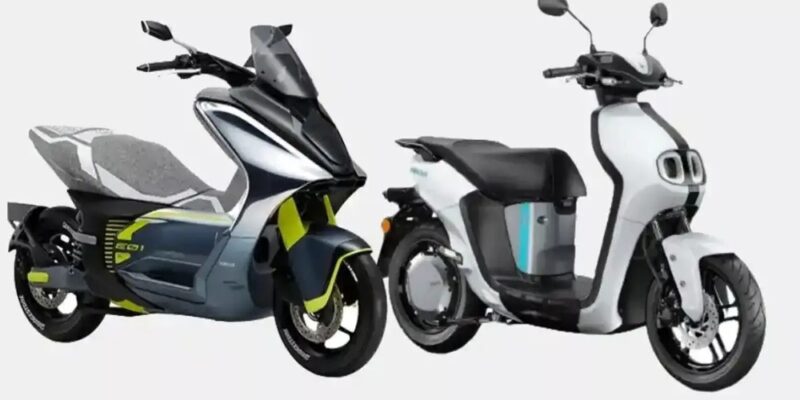
The presence of electric vehicles has been steadily increasing in Indian markets for various reasons. These include consumer awareness of sustainable transportation, government initiatives and cost-effective ownership.
This increased demand has led reputed automotive companies like Yamaha to offer robust contributions to the market. These contributions include, but are not limited to, EV scooters or electric battery-powered two-wheelers that fulfil consumer needs. Continue reading to discover more about these initiatives in detail.
Yamaha’s Strategy for the Indian Electric Vehicle Market
Legacy Inspired Pricing
Most consumers have come to expect EV scooters within a certain price range, as brands seek to attract customers and drive growth. However, Yamaha’s approach is different. This company believes in the quality of its products, which speaks for itself.
Furthermore, the company’s legacy of sporty gasoline-powered scooters has attracted consumer attention for years. For instance, the Yamaha Aerox 155 and Yamaha Ray ZR 125 Street Rally have been very popular with consumers for their appearance, performance, and distinctive Yamaha DNA.
Their interest is why the brand feels similarly confident about its electric scooters as well, since they are designed to the same standards.
Carbon Neutrality By 2050 Alignment
One of the biggest reasons behind Yamaha’s push for EV scooters and contributions to the Indian market is carbon neutrality. The term refers to the situation in which the amount of carbon dioxide produced is absorbed by natural sinks.
As such, the brand aims to become fully carbon-neutral by 2050, in line with its environmental plan. Its plan includes, among other things, a call to reduce Scope 3 category 11 carbon emissions by 86% from 2024 to 2050.
That is why the company is working on initiatives to improve the fuel efficiency of its ICE two-wheelers and expand its EV scooter range. Furthermore, they are exploring ways to create carbon-neutral fuel power trains. Carbon-neutral fuels include hydrogen, synthetic liquids and biofuels.
New Offerings By the End of 2026
In addition to the Yamaha EC-06 EV scooter, which has already been launched, the company plans to launch 9 other models. This decision aligns with their plan to increase market share to 25% by 2030, up from 17% currently.
They can do so easily due to their 1.5 million-unit production capacity, of which they are utilising 1 million units.
Yamaha EC-06 and Yamaha Aerox E
Both the Yamaha EC-06 and Yamaha Aerox E are part of Yamaha’s plan to launch 10 new products by the end of 2026. Of these, the Yamaha EC-06 has already been launched and has attracted significant attention.
Consumers have appreciated its sleek, dynamic appearance, reinforced by sharp lines and a rugged look. Furthermore, its 6.7 kW (9.1 PS) of power and 26 Nm of torque deliver the performance that riders demand.
Frequent commuters have also praised its 169 km Indian Driving Cycle (IDC) range, which makes long journeys easier. The Yamaha Aerox E, on the other hand, has yet to be launched and is generating significant buzz.
This buzz stems from its legacy-inspired looks and expectations of a power-packed performance, like that of the Yamaha Aerox 155.
Conclusion
As the market continues to grow, companies like Yamaha Motors will continue to work on initiatives such as EV scooters to fuel that growth. You may also expect the introduction of EV variants of their popular ICE motorcycles.
This development would align with Yamaha’s plan to launch new products by the end of 2026, providing consumers with diverse commuting options. So, you can expect various developments in the future that will greatly benefit consumers like yourselves.








Comments