
 By
By 
Probability mathematics governs every roulette outcome regardless of the currency used. Players at crypto.games/roulette/tether benefit from stable value, clarifying what odds actually mean financially. Understanding true probabilities, house edge impacts, and expected returns helps set realistic expectations. The numbers behind roulette remain constant, but stable currency makes their financial implications crystal clear. Knowing exact odds for every bet type separates informed players from those gambling unthinkingly, hoping for luck without grasping actual mathematical realities.
European versus American wheels
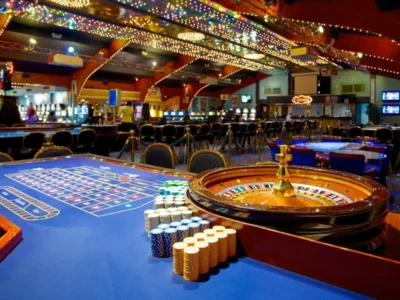
- Wheel configuration differences – European roulette features thirty-seven pockets numbered zero through thirty-six. American wheels add double-zero, creating thirty-eight total positions. This single extra pocket changes everything mathematically. European wheels give players better odds across every bet type. The house edge drops from 5.26 per cent on American wheels to 2.7 per cent on European versions. Smart players choose European wheels exclusively when available.
- Zero impact on probabilities – That green zero pocket creates a house advantage fundamentally. Without it, even-money bets would truly pay fifty-fifty, creating zero house edge. The zero gives casinos mathematical certainty of profits over time. Every bet loses when zero hits, except straight bets on zero itself. This asymmetry between thirty-seven positions and thirty-five to one payouts guarantees house profits long-term.
Straight bet mathematics
Single number bets pay thirty-five to one on European wheels. The true odds equal thirty-six to one, though, since thirty-seven total positions exist. This gap represents the house edge directly. Bet one hundred USDT on single numbers repeatedly and expect to lose 2.7 USDT per spin on average long-term. USDT clarity makes loss rates concrete. That 2.7 per cent edge means losing two dollars seventy cents per hundred wagered. Over a thousand-dollar action expects twenty-seven dollars lost to the house edge. The stable value lets players calculate exact expected losses rather than dealing with fluctuating crypto, making cost predictions impossible.
Split and street probabilities
- Two-number coverage – Split bets covering adjacent numbers pay seventeen to one. Win probability doubles to 5.4 per cent compared to straight bets. The improved frequency comes at the cost of halved payouts. House edge remains identical at 2.7 per cent, though. No coverage strategy beats house advantage mathematically.
- Three-number streets – Street bets spanning horizontal rows pay eleven to one, covering 8.1 per cent of wheel positions. The progression continues with corners at four numbers paying eight to one. Each expansion trades payout size for improved hit frequency while maintaining constant house edge across all inside bet types.
Outside bet mathematics
- Red and black bets cover eighteen numbers each, providing 48.6 per cent win probability on European wheels. Payout at one-to-one means doubling stakes on wins. The 2.7 per cent house edge applies identically here despite dramatically different coverage compared to inside bets.
- Dozen and column bets cover twelve numbers at 32.4 per cent probability, paying two to one. These middle-ground options provide moderate hit frequency with decent payouts. The mathematical edge stays constant regardless of whether an AOo bet type offers an advantage over others fundamentally.
Expected value calculations
Every roulette bet carries a negative expected value due to the house edge. Wagering one hundred USDT on any bet type expects a return of 97.3 USDT on European wheels. That 2.7 USDT loss represents the mathematical cost of entertainment regardless of actual session outcomes. Short-term variance creates winning and losing sessions. Some players walk away ahead. Others lose more than expected values suggest. Over thousands of spins, though, actual results converge toward mathematical expectations inexorably. Understanding this reality prevents false beliefs about beating roulette through strategy or luck.








Comments