
 By
By 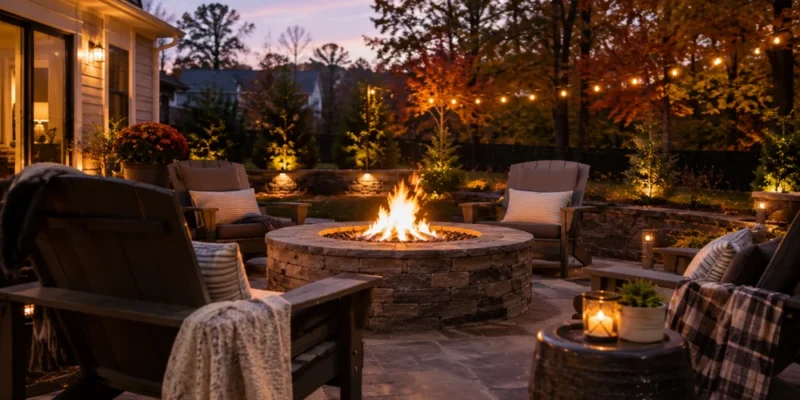
There is an ancient, magnetic magic in gathering around an open flame. As crisp autumn air sweeps into the Carolinas and temperatures drop into the 40s and 50s, the backyard patio transforms from a summer barbecue zone into a cozy, glowing evening retreat. Whether you are roasting marshmallows with your children, enjoying a glass of wine with neighbors, or simply decompressing after a demanding workweek, a fire feature serves as the undisputed emotional centerpiece of modern outdoor living.
Yet, when homeowners set out to incorporate a permanent fire feature into their hardscape, they quickly encounter a pivotal dilemma: should you build a crackling, traditional wood-burning fire pit or invest in the push-button convenience of natural gas or propane? Beyond personal aesthetic preferences, this choice involves strict municipal fire codes, underground fuel plumbing, thermodynamic safety, and specialized refractory masonry. Consulting an expert team specializing in custom fire pit installation Charlotte NC ensures your fire feature not only elevates your patio’s beauty but operates in full compliance with local Mecklenburg County fire regulations and safety clearances. In this comprehensive homeowner’s guide, we break down fuel comparisons, building codes, masonry materials, ergonomic seating dimensions, and long-term maintenance.
| KEY TAKEAWAY: Thermal Physics Warning Standard landscape blocks or decorative river rocks must NEVER be used inside a fire chamber. River stones contain trapped moisture that expands rapidly when heated, turning rocks into dangerous explosive projectiles. Only certified refractory fire brick and heat-rated mortar should contact open flame. |
1. Head-to-Head: Gas vs. Wood-Burning Fire Features
Both wood and gas fire features offer unique lifestyles, sensory experiences, and operational demands. Understanding the day-to-day realities of each fuel type helps you choose the perfect fit for your household:
| Feature / Consideration | Wood-Burning Fire Pit | Natural Gas Fire Pit | Propane (Tank / Bulk) Fire Pit |
|---|---|---|---|
| Sensory Experience | Crackling wood, campfire aroma, dynamic dancing flames | Clean, modern flame, instant heat, zero sparks | Identical to natural gas; portable or plumbed |
| Ignition & Shutdown | 15-20 minutes to light; must burn down or extinguish | Instant on/off via wall switch, key valve, or remote | Instant on/off; requires tank valve turn |
| Smoke & Embers | Produces smoke, soot, and flying embers (wind sensitive) | 100% smokeless; zero ash, soot, or flying sparks | 100% smokeless; clean burning |
| Heat Output (BTUs) | Extremely high (60,000 – 120,000+ BTUs) | Moderate to High (50,000 – 150,000+ BTUs) | Moderate to High (40,000 – 100,000 BTUs) |
| Fuel Logistics | Must purchase, haul, chop, and store seasoned firewood | Unlimited continuous fuel via home natural gas line | Must refill 20-lb tanks or tie into LP bulk tank |
| Average Install Cost | $2,500 – $6,000 (Masonry construction) | $4,500 – $9,500 (Includes trenching & gas line) | $3,500 – $7,500 (Depending on tank enclosure) |
| Clearance Restrictions | Strict (Typically 25 ft from combustible structures) | Flexible (Typically 10-15 ft from structures) | Flexible (Can be used closer to outdoor dining) |
| Child & Pet Safety | Requires constant supervision; unpredictable sparks | High safety control; instant flame shutoff | High safety control; instant flame shutoff |
2. Local Fire Codes and Clearances: Navigating Charlotte Regulations
Fire pits are open-flame devices governed by local municipal fire prevention ordinances and the North Carolina Residential Building Code. Disregarding these regulations can lead to municipal fines, invalidated homeowner insurance claims in the event of a fire, and severe safety hazards for your family and neighbors.
Key Clearances for Mecklenburg County & Greater Charlotte:
- Wood Clearances: Wood-Burning Setbacks (The 25-Foot Rule): Under standard International Fire Code (IFC) regulations enforced across Charlotte, open-burning wood fire pits must be positioned at least 25 feet away from any combustible structure. This includes house walls, vinyl siding, wooden fences, detached sheds, overhanging eaves, and combustible wooden decks.
- Gas Clearances: Gas Fire Feature Setbacks (The 10- to 15-Foot Rule): Because natural gas and propane fire pits produce no floating embers or sparks, local ordinances allow them to be installed significantly closer to residential structures-typically 10 to 15 feet from exterior walls, provided they are not placed beneath covered porches or low-hanging ceilings.
- Vertical Clearances: Overhead Canopy Restrictions: No fire pit-wood or gas-should ever be installed directly beneath low-hanging tree branches, telephone cables, or fabric awnings. A minimum vertical clearance of 20 feet above the flame is standard practice.
- Spark Arrestors: Spark Arrestor Screens: For wood-burning fire pits within suburban residential neighborhoods, Mecklenburg County fire marshals strongly advise using a heavy-gauge wire mesh spark arrestor screen to prevent airborne cinders from drifting onto dried pine straw or neighboring roofs during breezy evenings.
3. Engineering Anatomy: Materials That Resist Extreme Thermal Shock
The interior of a fire pit experiences intense thermodynamic stress. Internal temperatures in a vigorous hardwood fire regularly exceed 1,000°F to 1,400°F. When moisture-laden materials encounter that degree of heat, the steam trapped within concrete pores expands rapidly, creating violent spalling, severe surface cracking, or catastrophic stone blowout.
The Five Structural Layers of a Master-Built Fire Pit:
- 1. Structural Sub-Footing: Sub-Patio Compacted Foundation: A 6- to 8-inch reinforced concrete or compacted crushed stone footing poured below the paver level to support the massive dead weight of the masonry (often 1,500 to 3,000 lbs) without settling.
- 2. Fire Brick Lining: Refractory Fire Brick Core: The inner fire chamber must be lined with certified yellow refractory fire brick (ASTM C27 specification). These dense ceramic bricks are specifically engineered to withstand 2,000°F+ temperatures without cracking or transferring heat outward.
- 3. Refractory Mortar: High-Temperature Refractory Mortar: Standard masonry mortar contains Portland cement and sand, which degrades and crumbles when exposed to direct flames. Professional masons use premixed, air-setting refractory mortar (such as Heatstop) that vitrifies under extreme heat.
- 4. Thermal Air Gap: Insulated Air Gap: A 1- to 2-inch expansion gap is intentionally left between the inner fire brick ring and the outer decorative stone facade. This thermal buffer prevents the extreme heat of the fire from heating the outer stone, keeping exterior walls safe to the touch.
- 5. Exterior Stone Facade: Decorative Exterior Masonry & Coping: The outer visible facade is constructed using stacked natural stone veneer, tumbled concrete wall block, or brick. The top is finished with smooth 2-inch thermal bluestone, flagstone, or travertine coping with eased edges to provide a comfortable armrest or drink ledge.
4. Ergonomic Layout: Designing for Warmth, Flow, and Intimacy
A fire pit is only as enjoyable as the seating area surrounding it. If the fire pit is too tall, heat bypasses seated guests; if it is too short, embers blow into laps; if the seating is too close, knees roast while backs freeze.
Golden Dimensions for Fire Pit Architecture:
- Height Ergonomics: Ideal Wall Height (16 to 18 Inches): The top cap of the fire pit should stand between 16 and 18 inches above the finished patio surface. This matches standard chair height, allowing guests to comfortably rest their feet on the outer coping while seated.
- Interior Diameter: Chamber Diameter (36 to 48 Inches): An interior diameter of 36 to 48 inches provides ample space for 4 to 6 people to sit comfortably around the perimeter while maintaining a robust, well-proportioned fire.
- Walkway Clearance: The 7-Foot Perimeter Clearance Circle: Ensure a minimum 7-foot radius of open paver patio around the entire fire pit. This accommodates 36-inch deep Adirondack chairs or patio lounge seating with 3 to 4 feet of walking clearance behind them.
- Permanent Seat Walls: Integrated Curved Seat Walls: Building a semi-circular 18-inch stone seat wall 4 feet back from the fire pit creates permanent amphitheater-style seating that accommodates large crowds without dragging heavy furniture across your lawn.
5. Gas Line Plumbing and Burner Technology
If you choose a natural gas or propane fire pit, the fuel delivery system requires rigorous mechanical design. A licensed plumber must run high-density polyethylene (HDPE) gas pipe below the frost line (typically 18 to 24 inches deep) directly to the center of the fire pit before paver base installation.
Modern gas fire features utilize heavy-duty 304 marine-grade stainless steel burner rings (often shaped in concentric rings, bullet burners, or linear H-burners) mounted in a weep-holed pan that drains rainwater. The burner is buried beneath specialized heat-conducting media:
- Lava Rock: Volcanic Basalt Lava Rock: Classic, porous, rustic black or red lava stone that radiates intense thermal energy even after the gas flame is lowered.
- Fire Glass: Tempered Reflective Fire Glass: High-temperature tempered glass crystals that produce mesmerizing reflections and modern elegance without melting or releasing toxic fumes.
- Ceramic Logs: Ceramic Gas Logs: Molded from high-temperature refractory ceramics to replicate natural charred oak, birch, or driftwood for homeowners who crave the wood look with gas convenience.
6. Seasonal Maintenance & Long-Term Care
A professionally constructed masonry fire feature requires minimal maintenance, but following a few seasonal practices preserves its beauty and mechanical safety:
- 1. Ash Cleanout: Regular Ash Removal (Wood): Never leave wet ash sitting in the bottom of a wood fire pit. Wet ash creates alkaline lye that attacks refractory mortar joints. Scoop ash into a metal bucket once cool.
- 2. Burner Clearing: Burner Orifice Inspection (Gas): Spiders and small insects love nesting in gas burner orifices during spring. Inspect and clear burner ports before firing up your system for the autumn season.
- 3. Off-Season Covers: Weatherproof Protective Covers: Invest in a custom-fitted heavy vinyl or canvas cover during the off-season to keep torrential summer downpours, leaves, and winter snow from pooling inside the fire pan.
7. Frequently Asked Questions (FAQ)
Q: How much does it cost to install a permanent stone fire pit in Charlotte NC?
Direct Answer: In the Charlotte NC area, custom masonry wood-burning fire pits typically cost between $2,500 and $5,500 depending on stone materials and site grading. A custom natural gas fire pit generally costs between $4,500 and $9,000, which includes professional underground trenching and licensed gas line plumbing from the home meter.
Q: Can you put a fire pit directly on a wooden or composite deck?
Direct Answer: No. You should never install a wood-burning fire pit on a combustible wooden or composite deck due to radiant heat and flying embers. However, certified gas or propane fire tables with UL-listed heat shields can be safely installed on composite or timber decks, provided all manufacturer clearances to combustible railings and walls are maintained.
Q: Can I build a fire pit with regular landscaping retaining wall blocks?
Direct Answer: Standard red clay masonry bricks or concrete landscape blocks are not rated for direct fire exposure; they crack, crumble, and can pop under thermal expansion. Professional outdoor fire pits must be lined with specialized yellow refractory fire brick bonded with heat-resistant refractory mortar.
Q: How far does a fire pit have to be from a house in Charlotte NC?
Direct Answer: In Mecklenburg County and Charlotte, natural gas fire pits must generally sit 10 to 15 feet away from residential structures, while open-burning wood fire pits require a minimum 25-foot clearance from combustible structures, fences, and overhanging trees under local fire prevention codes.
Conclusion: Ignite Your Outdoor Lifestyle
Whether you choose the primal crackle and glowing embers of a traditional wood fire or the effortless, smokeless elegance of push-button natural gas, adding a custom stone fire pit transforms your backyard into an all-season living sanctuary.
By prioritizing certified refractory materials, strict municipal safety clearances, and comfortable ergonomic seating dimensions, your outdoor fire feature will provide your family with decades of warmth, laughter, and unforgettable memories under the Carolina stars.







Comments