
 By
By 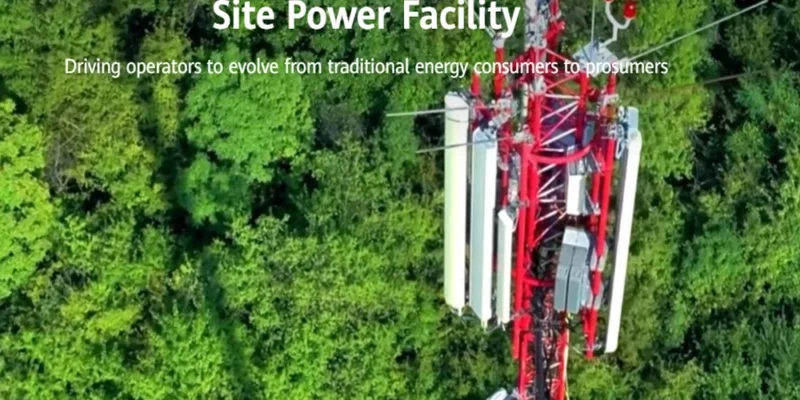
Evolution of Huawei’s Telecom Power Portfolio
Huawei’s journey in telecom power supply began in the early 2000s, when the company spotted a critical gap between rising global communication demand and the limitations of traditional power systems for network infrastructure. Back then, most telecom operators relied on bulky lead-acid batteries and basic rectifier units that required frequent maintenance, had short lifespans, and struggled with energy waste. Huawei set out to redefine this segment by merging its core telecom hardware expertise with power electronics innovation, a move that would soon position it as a leading player in the space. Over two decades, the portfolio has expanded to cover every layer of the telecom network: from massive core data centers and central office switches to remote rural base stations, small cell sites, and edge computing nodes. Each generation of products has been tailored to match the needs of evolving mobile technologies-2G, 3G, 4G, and now 5G-addressing unique demands like higher data speeds, lower latency, denser deployments, and stricter environmental regulations. Today, Huawei’s telecom power solutions are not just power delivery tools; they are integrated, intelligent systems that optimize energy use, extend equipment life, and slash operational costs for operators across 170+ countries.
Key Technological Innovations in Huawei’s Power Products
The edge of Huawei’s telecom power supply line lies in proprietary technologies that solve long-standing pain points for operators. One standout is SmartLi, an intelligent lithium-ion battery system designed to replace outdated lead-acid alternatives. Unlike lead-acid batteries, which typically last 3-5 years, need regular water top-ups, and only handle 2,000 charge-discharge cycles, SmartLi batteries boast a 15-year lifespan, zero maintenance requirements, and support up to 6,000 deep cycles while retaining 80% of their capacity. This makes them ideal for sites with unstable grid access, where reliable backup power is non-negotiable. Another game-changing innovation is the HyperSite modular power system, which uses a plug-and-play design to cut site deployment time by 60%. Pre-assembled rectifier units and battery packs mean operators can deploy a full telecom power setup in 1 day, compared to 3 days for traditional systems. The rectifier modules in HyperSite have an efficiency rating of over 96.5%, so less energy is lost as heat-translating to 30% lower electricity bills for most sites. For extreme environments, Huawei offers power solutions with a wide operating temperature range (-40°C to 65°C) and IP65-level dust and water resistance, suitable for deserts, Arctic regions, and tropical rainforests. Complementing these hardware is the PowerStar intelligent management platform, which uses AI algorithms to monitor power usage in real time, predict failures up to 7 days in advance, and adjust energy flow dynamically based on network traffic or grid availability. This remote capability eliminates costly on-site visits for remote sites, reducing maintenance expenses by 40% on average.
Real-World Deployments: Success Stories Across Regions
The impact of Huawei’s telecom power solutions is best seen in tangible results from global deployments. In Kenya, Orange Telecom partnered with Huawei in 2021 to power 2,200 rural 4G sites with a hybrid solar-power system combining SmartLi batteries, solar panels, and grid backup. Before this, these sites faced 12+ hours of daily outages, leading to 30% lower network availability and $2.5 million in annual maintenance and energy costs. After deployment, outage time dropped by 92%, network availability rose to 99.9%, and Orange saved $2.1 million annually in energy expenses-enough to expand coverage to another 500 villages in 2022. In Norway, Telenor needed to maintain 5G networks in the Arctic Circle, where temperatures plummet to -50°C in winter. Traditional power systems failed here, as lead-acid batteries lost capacity and metal components froze, causing unplanned downtime of 15% each winter. Huawei’s cold-adapted power solution, with integrated battery heating and insulated casings, ensured continuous operation, reducing unplanned downtime by 87% and cutting energy use by 28% (saving $1.2 million yearly for the 50 Arctic sites). In Indonesia, a local operator faced constant power system failures in Sumatra’s high-humidity, 3,000mm annual rainfall environment, where water seepage damaged 15% of power units yearly. Using Huawei’s IP65-rated power products for 500 small cell sites, the operator eliminated water-related issues, extended equipment lifespan by 5 years, and reduced maintenance costs by 42%. These deployments prove Huawei’s solutions adapt to every challenge, from African villages to Arctic outposts.
Future Roadmap: Aligning with 5G-Advanced and 6G Needs
As telecom moves toward 5G-Advanced and 6G, power requirements will grow exponentially. 6G will support 100x higher data speeds than 5G, connect 1 trillion+ devices, and deliver sub-millisecond latency-demanding power systems that are more efficient, intelligent, and flexible than ever. Huawei’s future telecom power roadmap focuses on three core areas. First, integrating more renewable energy sources: Huawei is developing hybrid systems that combine solar, wind, and small-scale hydro to create nearly off-grid networks, cutting carbon emissions by 50% for remote sites and reducing reliance on fossil fuels. Second, enhancing AI-powered self-optimization: upcoming PowerStar versions will use predictive analytics to adjust power flow based on real-time network demand, weather forecasts, and grid price fluctuations, achieving maximum efficiency even as traffic spikes or drops. Third, edge computing power solutions: as edge data centers become critical for low-latency applications, Huawei is designing compact, high-density power modules that fit in urban street cabinets or remote edge sites, with plans to launch these by 2026. Additionally, Huawei collaborates with global standards bodies like the ITU to shape sustainable telecom power norms, ensuring new technologies are interoperable and reduce industry-wide carbon footprints. As the world becomes more connected, telecom power will remain the unsung backbone of digital life, and Huawei is positioned to lead this evolution, building solutions that support the next generation of communication while keeping operations reliable and cost-effective.







Comments