
 By
By 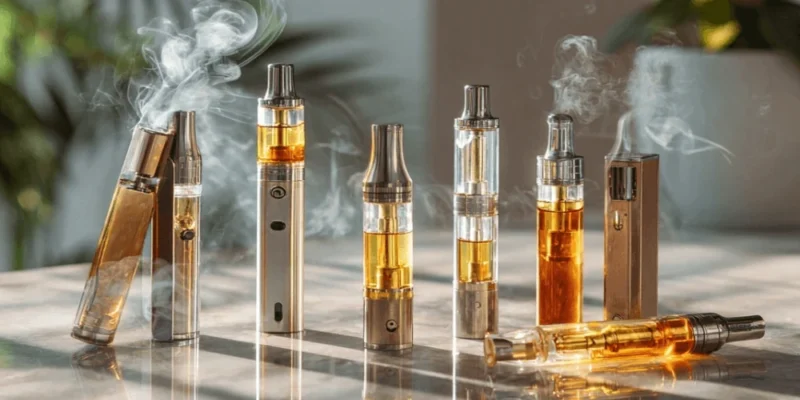
top thca vape cartridges feel smoother to inhale when residual solvents, plant waxes, and combustion byproducts are removed from the oil before it reaches the cartridge, because those three contaminants are responsible for most of the throat irritation users attribute to the extract itself. Oil purity is where smoothness begins, not hardware. Harshness has specific origins, and almost none of them are inherent to THCA extract as a compound. Solvents left behind from incomplete purging sit in the oil matrix and release as irritants on every draw, regardless of how good the terpene profile is. Plant waxes that survived winterisation do not vaporise at cartridge operating temperatures. They burn, and burned wax in the airpath is what produces that dense, abrasive inhale that worsens session by session as residue accumulates on the element surface.
Oil refinement sets baseline
Winterisation removes harshness
During winterisation, plant waxes and lipids are removed from extracted oil before it reaches a cartridge, reducing dense, abrasive vapour produced by heat. Using oil that skipped this step results in wax content that does not vaporise cleanly, accumulating on the heating element over repeated sessions, increasing harshness.
Purging eliminates irritants
Under negative pressure and controlled temperatures, vacuum purging draws out residual processing solvents from the oil. Every time you draw from an insufficiently purged cartridge, your throat irritates, no matter how potent the cannabinoid potency or terpenes are. Irritation from solvent residuals occurs consistently throughout sessions rather than only occasionally, which is why incomplete purging affects the entire cartridge experience.
Viscosity affects draw feel
Oil viscosity determines whether or not the heating element receives extract at a rate that allows it to vaporise cleanly, or if it floods, producing oversaturated vapour that feels heavy and wet. Too thin, and the element floods on contact. Too thick and uneven heating scorches partial contact areas instead.
Temperature control matters
Low voltage settings produce smoother draws because they keep oil temperatures below the threshold where clean vaporisation ends and combustion begins, which is where cartridge harshness is caused.
Changing voltage from high to mid produces an immediate noticeable difference in how the vapour feels before it even reaches the throat. The draw cools, the vapour feels cleaner, and the airway response is noticeably less reactive within a single comparison session. Higher voltage pushes oil compounds past their stable vaporisation threshold, and the byproducts enter the vapour stream. This is regardless of how clean the oil was before heating. Ceramic elements support this by keeping heat distribution consistent across the entire element surface. This prevents the localised temperature spikes that push contact points into combustion range even when the battery voltage is set conservatively.
Airflow design contribution
Well-calibrated airflow makes inhaling smoother by cooling vapour slightly during transit between the heating element and mouthpiece, reducing the thermal component of harshness that hot vapour produces on direct contact with airway tissue. Airflow engineering is the variable that affects smoothness without touching oil quality or element design at all. Restricted airflow pulls oil to the element faster than it vaporises cleanly.
- Calibrated airflow resistance matches draw effort to the heating element’s vaporisation rate without triggering flooding or vapour dilution at either extreme.
- Longer airflow transit paths cool vapour before mouthpiece contact, reducing thermal harshness that registers on the airway regardless of oil cleanliness.
- Glass airflow path materials stay chemically neutral under heat, whereas plastic alternatives introduce trace leached compounds into the vapour stream across repeated sessions.
Smoothness in a THCA cartridge is the combined result of oil arriving clean, hardware vaporising it without combustion, temperature staying within the clean vaporisation range, and airflow delivering cooled vapour to the mouthpiece at a draw resistance the element can match. A weakness at any single point affects every draw that follows, and that weakness compounds rather than stabilises the further through the cartridge a user gets.







Comments