
 By
By 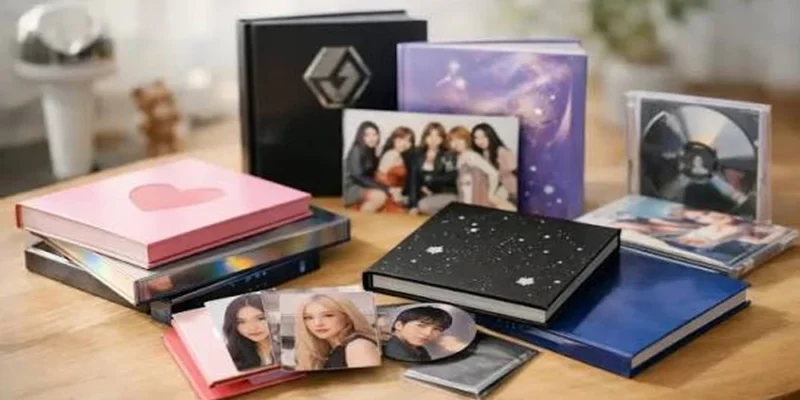
Most people assume physical albums are dead. Streaming killed them, right? Tell that to the MOA fan who just spent an hour unboxing her third version of the same release, photographing every photocard against a pastel backdrop, and cataloguing each insert in a dedicated binder. The object itself is the point – and that shift in how fans relate to music is quietly rewriting the rules of what an album even is.
K-pop didn’t just survive the streaming era. It built an entirely different reason to own a physical copy. Understanding why means looking at packaging design, narrative structure, fandom rituals, and a global market that still spends serious money on plastic and paper.
The Global Physical Music Market Is Not Dead
Before getting into the K-pop specifics, the macro picture deserves a moment. The IFPI’s Global Music Report 2025 revealed that global recorded music revenues grew by 4.8% in 2024, reaching $29.6 billion. Streaming dominates that figure, but physical formats are not an afterthought. Asia maintained its status as the largest physical market in the world, accounting for 45.1% of global physical revenues in 2024, according to the same IFPI report. K-pop acts, based primarily in South Korea, are a central reason that number stays so high. You can read the IFPI Global Music Report 2025 findings directly on ifpi.org for the full regional breakdown.
Western markets are catching up too. The Official Charts Company and BPI reported that physical album sales experienced a 3.2% increase in the first six months of 2024, with 8,044,760 units sold – the first time the sector had seen an increase since 2004, when a shift to digital music consumption and streaming began. Superfans driving that rebound are behaving a lot like K-pop collectors: they want ownership, not just access. The NME’s 2024 coverage of this BPI data points directly to fandom culture as a key driver of that resurgence.
The Chapter Framework: Why TXT Albums Sell as a Series
Most Western artists drop an album. K-pop groups release a chapter. That distinction sounds subtle, but it changes everything about how fans collect.
TXT’s core concept centers on the “growth pains” of adolescence and the transition into adulthood, meticulously documented through their discography, which is organized into thematic chapters. That’s not marketing language. It’s the actual architecture of their catalog. Each release is designed to connect to the one before it – the same characters, the same visual world, a story that advances. Buying just one installment feels incomplete, the same way buying book four of a series without books one through three would feel odd.
Their debut EP introduced a bright, whimsical sound before the narrative evolved into the darker, more rebellious tones of The Chaos Chapter series, where the group embraced a pop-punk revivalist sound. Then the Star Chapter series arrived, shifting the emotional register again. Each era demands its own physical artifacts: different packaging, different photocards, different versions. If you want to follow the story, you follow the releases. That structural logic is a collector’s engine built directly into the artistry.
For fans who want to own the full arc, TXT albums are consistently sought after across multiple eras, precisely because the group’s narrative continuity makes each release feel like a meaningful piece of a larger whole.
What Makes the Object Itself Worth Keeping
Crack open a K-pop album and you’re not finding a disc in a jewel case. You’re finding a small book. A photocard lottery. A folded poster. A lyric booklet that functions more like a coffee-table art print than a liner note. Some releases arrive in multiple physical versions with different cover art, different inclusions, and different photocards – each version creating a distinct collectible even though the music inside is identical.
That packaging philosophy traces back to a simple insight: fans don’t just want to hear their favorite group. They want to hold something that belongs to that world. A photocard of Yeonjun is a physical point of contact with a parasocial relationship that, for many fans, is genuinely meaningful. Photocards get traded, gifted, graded, and displayed. The secondary market around them is real money.
The versions model also means that dedicated fans will buy the same release three or four times. That’s not irrational from the collector’s perspective. Each version is meaningfully different as an object. You’re not buying duplicate content – you’re completing a set.
The MOA Collector Scenario: A Real Shelf, Real Choices
Picture a specific situation: you’re building a display shelf for your TXT collection and you’re working with limited space. The instinct is to grab one version of each era. But once you’ve held a Weverse Albums version next to a standard retail version, the difference in tactile quality, box dimensions, and included content is obvious. They’re not interchangeable.
Practical choices for a curated shelf:
- Prioritize narrative eras first. The Dream Chapter, The Chaos Chapter, The Name Chapter, and The Star Chapter represent distinct creative periods. One physical copy from each era tells the full story.
- Choose the version with your bias’s photocard slot. Every version has a different photocard lineup, so knowing which member you collect before buying saves money and avoids duplicate hunts.
- Factor in display size. Mini albums are smaller objects than full-length releases. Mixing formats on a shelf looks intentional when planned; it looks messy when it isn’t.
- Buy sealed if you plan to resell, open if you plan to display. The secondary market for sealed K-pop albums is consistent. Opened copies drop in value immediately but gain in personal meaning.
None of these decisions require obsessive fandom. They’re the same calls any thoughtful collector makes when curating a physical archive of something they care about.
The Storytelling Edge Over Standard Pop Merchandise
Here’s what separates K-pop albums from a signed poster or a tour t-shirt: the album is the art, not a byproduct of it. The packaging, the photocards, the design language – all of it is produced with the same creative intention as the music inside.
TXT’s legacy is defined by their storytelling approach, where each album is accompanied by a concept trailer and music videos that form a cohesive narrative, further expanded through a webtoon and web novel where the members portray fictionalized versions of themselves in a magical world. The album becomes a physical anchor point for that larger universe. You’re not just buying a record. You’re buying an artifact from a fictional world that has a lot of thought behind it.
That depth is exactly why K-pop albums have legs as collectibles in a way that standard merch usually doesn’t. A hoodie from a 2021 tour dates itself immediately. An album from The Dream Chapter era is a time capsule with context – a document of who TXT were at a specific creative moment, with all the visual and textual content to prove it.
A Quick Look at the Numbers
| TXT Era | Chapter Theme | Tonal Direction | Collector Appeal |
|---|---|---|---|
| The Dream Chapter | Youth and wonder | Bright, whimsical pop | Debut era rarity |
| The Chaos Chapter | Rebellion and confusion | Pop-punk, alternative | Fan-favorite aesthetic |
| The Name Chapter | Identity and belonging | Expansive, cinematic | Multiple versions per release |
| The Star Chapter | Home and connection | Mature, layered | Most recent; actively collected |
Collecting With Intention
The best K-pop collections aren’t the biggest ones. They’re the most considered. A shelf with four albums – one per chapter – tells a richer story than forty duplicates stacked in a corner. Pick the eras that matter to you, choose versions with purpose, and treat the objects the way they were clearly designed to be treated: as small works of art that happen to contain music.
Physical albums built around genuine narrative and craft aren’t going anywhere. If anything, in a world where everything else is just a file on a server somewhere, owning something real is starting to feel like the radical choice again.









Comments