
 By
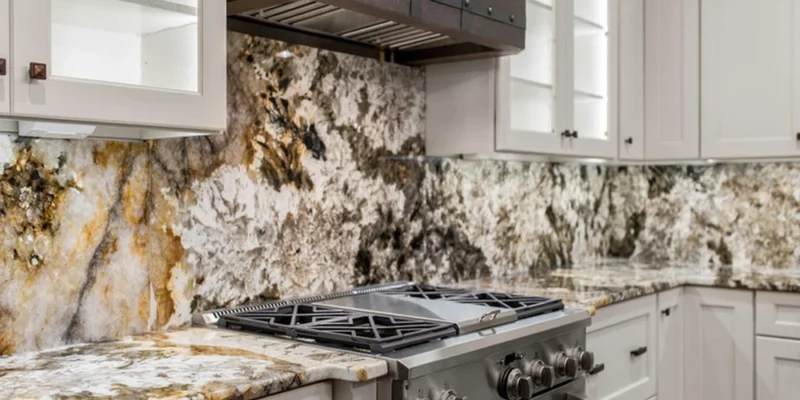
Most people pick their slab in about eleven minutes. That is the number I keep hearing from fabricators, and it should scare you, because you will live with that decision for twenty years or more. Granite is a stone pulled out of the ground in blocks, cut into slabs, and polished, and every slab is a one-off. Nobody can order you an exact duplicate of the piece you fell in love with.
So the buying process is less about picking a pretty rock and more about managing a decision you can only make once. Get the order of operations right and the whole thing feels calm. Skip a step and you end up staring at a seam you did not expect, in a color that looks nothing like it did under the warehouse lights.
This guide covers the parts of the process that actually decide whether you are happy: how to read a slab, where seams land, what sealing really means, and the questions worth asking before you sign. If you are working with a local fabricator, most of it applies whether you are buying granite countertops or any other natural stone.
Why Granite Is Still on the Table
Quartz got loud over the last decade, and it earned some of that attention. It is uniform, non-porous, and predictable. Granite counters with a different pitch: it is a natural material formed under immense heat and pressure deep in the earth, and the U.S. Geological Survey tracks it as a mined dimension stone for good reason. It is genuinely old, genuinely hard, and genuinely variable.
That variability is the whole argument, in both directions. Your neighbor cannot buy the same kitchen you did. Neither can you, twice. If you want a surface where every square foot matches perfectly, quartz wins and I would tell you so. If you want a counter that looks like it came from somewhere instead of a factory, granite is the better pick.
Practically speaking, granite handles heat well, resists scratches from daily kitchen abuse, and does not care about the occasional spill. Those are the reasons it stayed popular while other trends cycled through.
Read the Slab, Not the Sample
Here is the mistake I see most often. Someone falls for a four inch sample at a showroom, orders the material, and is surprised when the full slab has heavy veining, a dark patch, or a color shift from one end to the other. A sample is a thumbnail. A slab is a landscape.
Ask to view the actual slab before it gets cut. Most yards will let you, and some will hold it for you. When you are standing in front of it:
- Look at it from both ends, because granite changes character across its length
- Turn your back to the window and look again, since natural light and fluorescent light read completely differently
- Check the sink and cooktop areas, because that is where the fabricator will cut and the pattern will jump
- Ask which face is the finished one, so you are approving the surface you will actually touch
Take a photo, then look at that photo on your phone in your own kitchen. It sounds fussy. It costs you ten minutes and saves you a decade of regret. Slabs vary because the stone varies, and the National Institute of Standards and Technology maintains documented standards work on dimension stone properties, which is a long way of saying the material is measured, not guessed at.
The Seam Conversation You Should Have Early
Seams are where two slabs meet, and they are unavoidable on most kitchens because slabs have a maximum size. What you can control is where they land.
A good fabricator will draw the seam layout before cutting and walk you through it. Push for seams away from the sink where possible, away from the most visible sightline when you walk in, and never right where you will be prepping food. A seam placed in a busy part of the pattern hides better than one in a quiet field of color. Ask how the two edges will be matched and whether the installer will do the final color match on site.
My honest opinion: a visible seam in the right place beats an invisible seam in the wrong one. Do not let anyone talk you out of seeing the layout first.
What Sealing Actually Does
Granite is porous, just less so than marble. Sealer slows absorption, it does not armor the surface. That distinction matters, because homeowners hear “sealed” and start leaving red wine on the counter overnight.
Most granite needs resealing somewhere between once a year and once every few years depending on the stone and how hard you are on it. Do the water test: drip a little water on an inconspicuous spot, wait, and see whether it beads or soaks in. If it darkens quickly, it is time. If it beads, you have time.
Skip the harsh cleaners. Mild soap, water, and a soft cloth handle almost everything. That is not a sales pitch for fancy products, it is just how the material behaves.
A Simple Decision Framework
I use a three pass method when helping people choose, and it keeps the emotion in the right place. Call it the Slab, Space, Spend pass.
Slab. Find two or three granites you genuinely like at full slab scale. Not one. One is a trap, because if your favorite gets sold you will panic-pick something worse.
Space. Check the stone against your cabinets, floor, and backsplash in person. A slab that stuns in a warehouse can turn muddy against warm wood cabinets. Bring a cabinet door sample if you can. This is the step almost everyone skips, and it is the one that decides whether a kitchen looks designed or assembled.
Spend. Get your quote itemized. You want to see material, fabrication, edge profile, cutouts for the sink and cooktop, tear-out of the old counter, and any stair or elevator fee. Ask directly what could add cost later. Nobody likes that question except the person who answers it honestly and keeps your project on budget.
Questions to Ask Before You Sign
Walk in with these and you will sort the serious shops from the order takers fast.
- Can I view my actual slab before cutting, and will you hold it?
- How do you handle seam placement, and will I approve the layout first?
- What is your templating process, and who measures on site?
- How long from template to install, and what delays it?
- What does your warranty cover, and what voids it?
On that last one, read the exclusions. Heat damage from a hot pan set directly on the surface is a common carve-out, and it is easy to avoid with a trivet or a landing pad by the stove. Small habit, big savings.
The Bottom Line
Granite rewards a buyer who slows down for one afternoon. View the slab in person, approve the seam layout, understand what sealing does, and get the quote in writing. Do those four things and the rest is details.
If you have a slab number and a fabricator who will draw the layout with you, you are in good shape. If you do not, that is the next call to make. What is the one thing in your current kitchen you would change first if you could?








Comments