
 By
By 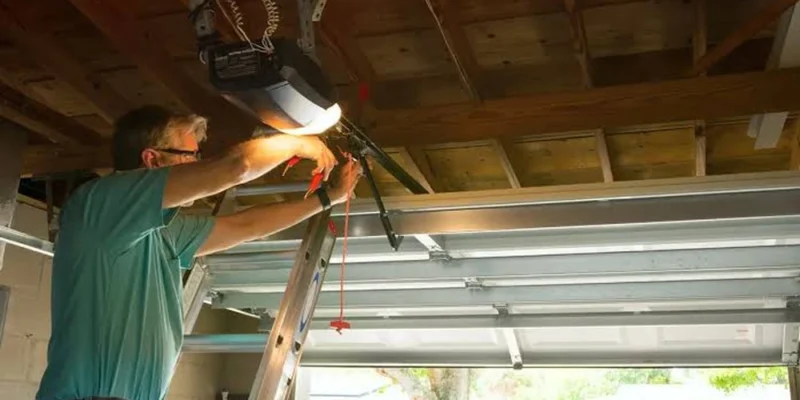
Your garage door opens and closes roughly 1,500 times a year, and most homeowners never once think about what that repetition does to springs, cables, and rollers. The honest answer to how often you should service it comes down to one number: twice a year, minimum, with a professional tune-up once every 12 months. That sounds like a lot until you price the alternative. A snapped torsion spring runs $200 to $350 to replace, and a fallen door can total your car’s hood in a split second. This guide gives you the exact schedule to follow, the DIY checks worth your Saturday morning, and the red flags that mean you call a pro before you touch anything.
Why Twice a Year Is the Number That Actually Matters
Think about what your door survives in a single week. It lifts a 150 to 300 pound slab of steel on steel cables, rides on rollers the size of hockey pucks, and does it all while suspended over your head. The Bureau of Labor Statistics groups garage door installers under general maintenance workers, a field it projects to grow about 5 percent through 2033, which tells you the demand for this work is not going anywhere. That demand exists because parts wear on a clock, not on your convenience.
Here is the logic behind the twice a year cadence. Springs flex through their full range of motion thousands of times, and every one of those cycles brings the metal closer to its fatigue limit. Rollers grind against steel tracks with grit and debris acting as sandpaper. Cables stretch and fray invisibly. Six months is about the longest window where minor wear stays minor. Push it to a year and a half and you are gambling that nothing gives out on a Monday morning when you are already late for work. I would rather spend $80 on a tune-up than $350 on a spring replacement, and that math is not close.
The Seasonal Checklist You Can Run Yourself
You do not need a toolbox the size of a contractor’s rig to catch most problems early. Set aside 20 minutes on the first weekend of spring and the first weekend of fall, and run through these five checks in order.
- The reverse test. Place a 2×4 or a roll of paper towels on the floor under the door’s path, hit the close button, and confirm the door reverses when it meets the object. This is the single most important safety test you can run at home, and it takes ninety seconds.
- The balance check. With the door closed, pull the release cord to disengage the opener, then lift the door manually to about waist height. Release it. A properly balanced door stays put. If it crashes down or floats up, your springs are out of tune and you need a technician, because spring adjustment is not a DIY project.
- Visual cable inspection. Look for frayed strands, rust streaks, or cables that sit unevenly on their drums. Any of those means you stop using the door immediately.
- Roller and track inspection. Wipe the tracks clean and check the rollers for flat spots, cracks, or excessive wobble. Nylon rollers wear faster than steel but run quieter, so know which you have.
- Hardware tightening. Grab a socket wrench and check every hinge bolt, track bracket bolt, and pulley bolt you can reach. Vibration works these loose over time, and a loose hinge throws the whole door out of alignment.
Run those checks and you will catch maybe 40 percent of what can go wrong. The other 60 percent lives inside the spring system, the opener gear train, and the cable drums, which brings us to why professional service still matters.
What a Professional Tune-Up Actually Covers
A legitimate tune-up is not a technician walking in, looking at the door, and handing you a bill. The work should include lubrication of every moving joint, spring and cable inspection, roller replacement when worn, track realignment, sensor cleaning and alignment, opener force testing, and a full safety reversal check. The Consumer Product Safety Commission has tracked garage door related injuries for years, and its guidance consistently stresses that automatic reversal systems fail silently, which is exactly the kind of failure only a trained eye catches.
Here is a real scenario for you. A homeowner in Decatur called us convinced their opener was dying because the door shook violently on the way down. The actual culprit was a single worn bottom roller that had developed a flat spot. One $12 roller and a squirt of lithium grease solved it. The opener was fine. That is the difference between a diagnostic visit and a parts cannon approach. A good technician finds the cheap fix before the expensive one.
One thing I will push back on: those $49 “tune-up specials” you see in coupon mailers. That price barely covers a service call and a can of lubricant, and it usually comes with a hard sales pitch for parts you do not need. A fair price for a thorough tune-up in the Atlanta metro runs $75 to $125, and it should take your tech 30 to 45 minutes of actual hands-on work, not a glance and a signature.
The Warning Signs That Mean Call Now, Not Later
Some failures announce themselves. Others do not, which is why the twice a year schedule exists. But when you notice any of these, skip the schedule and call a professional the same day, because every one of them points to a system under active stress.
- Grinding or screeching sounds. Metal on metal noise means a roller is binding or a spring is rubbing against something it should not touch.
- The door moves in jerks. Smooth travel is the baseline. Any stutter in the first or last three feet of travel points to cable or track trouble.
- The opener strains or stalls. If the motor sounds like it is working harder than it used to, the door’s balance is off, and you are now wearing out the opener to compensate.
- Visible gaps or sagging panels. A door that sits crooked on its tracks is a door that will eventually come off those tracks entirely.
- The door slams down. A controlled descent is the only acceptable descent. Anything faster than a steady glide means the spring is losing tension or the cable has slipped.
If you live in the north Atlanta suburbs and any of these sound familiar, garage door maintenance services in Atlanta can get a technician to your door fast and usually fix the issue in a single visit. But the real win is booking that twice a year tune-up before a single warning sign ever shows up.
How Much Should You Budget for Garage Door Upkeep?
Let’s put dollar figures on the full ownership picture so you can plan. The Department of Energy points out that an insulated garage door reduces heat loss through an attached garage wall, which quietly lowers your heating and cooling load, so there is an energy payoff to keeping your door in good shape, not just a repair cost avoidance. Factor that in and the numbers look like this.
| Item | Typical Cost | Frequency |
|---|---|---|
| DIY lubricant and supplies | $15 to $30 | Twice a year |
| Professional tune-up | $75 to $125 | Once a year |
| Roller replacement (set of 10) | $100 to $150 | Every 5 to 7 years |
| Spring replacement | $200 to $350 | Every 8 to 12 years |
| Full cable replacement | $150 to $250 | As needed |
Add it up and you are looking at roughly $100 to $160 per year for proper maintenance. Compare that to the $700 to $1,200 bill that lands when a spring snaps, a cable snaps, and the door falls onto whatever is underneath it. The annual cost of prevention is less than the cost of one emergency visit, and you never have to schedule that visit at 7 a.m. on a workday.
One more thing worth saying plainly: never attempt spring work yourself. Torsion springs store enough energy to break bones, and the handful of DIY injuries I have seen over the years all trace back to someone with a wrench and a YouTube video. That job belongs to a professional every single time.
Build the Habit Before You Need the Repair
The garage door is the largest moving object in your home, and it gets double the use of your front door. Treating it like an appliance that needs occasional care, not like a wall that will hold forever, is the whole game. Put two reminders on your calendar today: one for the first weekend of spring, one for the first weekend of fall. Run the five DIY checks, book a professional tune-up for one of those visits, and you will stretch the life of your door system by years. The question is not whether your door will need service. It is whether you will schedule it on your terms or on the day something breaks. Which version sounds better to you?







Comments