
 By
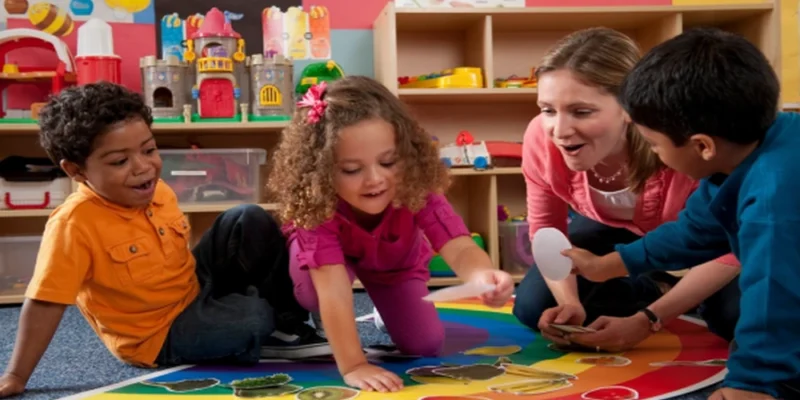
Many families choose a private preschool, pre-K, or prep school partly because it offers a second language from the very first year. In the US, Spanish is the most common choice. In the UK, independent prep schools increasingly offer Spanish alongside, or instead of, French. Parents often picture their four-year-old chatting away in Spanish by the time they leave.
Some programmes deliver real progress. Others offer a weekly song session that sounds impressive on a brochure but adds up to very little. Knowing what good early Spanish looks like helps families choose, and helps schools build programmes that actually work.
Why start so young
Young children have a few clear advantages as language learners. They’re still tuned into the sounds of language, so they pick up accents and pronunciation more naturally than older learners. They’re less self-conscious about making mistakes. And starting early gives them many more years of exposure before they finish school.
Organisations such as the Center for Applied Linguistics, which works on dual language and world language education, publish research and training for schools planning these programmes. Starting early only pays off when children get enough meaningful contact with the language and that contact continues year after year.
What good early Spanish looks like
In the best programmes for children aged three to seven, Spanish runs through the whole school day.
Children hear Spanish during routines: greetings, snack time, tidying up, getting ready to go outside. They learn through songs, rhymes, stories, puppets, movement games, and play. Teachers use gestures, pictures, and real objects to make meaning clear, so children understand without needing translation.
The focus is on listening and speaking. Reading and writing in Spanish come later, once children are comfortable with the sounds and common phrases, and usually after they’ve started reading in English.
How much time is enough?
Time with the language is the biggest factor in progress. A short weekly session can introduce sounds and spark interest, but children forget quickly between lessons. Programmes with daily contact, even fifteen or twenty minutes, usually produce much more progress than one longer weekly lesson.
Some private schools go further, offering partial immersion, where part of the school day is taught in Spanish, or full immersion in the early years. These programmes produce the strongest results but need teachers who are fluent in Spanish and trained in early childhood education.
Families should ask exactly how many minutes of Spanish children get each week, and how that changes as they move up through the school.
The teacher makes the difference
Young children learn Spanish best from teachers who speak it fluently, use it naturally, and understand how young children learn. Many strong private programmes hire native or near-native Spanish speakers with early years training.
The best teachers keep almost all of their Spanish time in Spanish. They repeat key language often, build routines children can predict, and give children lots of chances to respond, first with gestures and single words, then with short phrases.
Continuity through the school
A common problem in private schools is a strong early years programme that fades out later. Children learn songs and routines in pre-K and kindergarten, then get one lesson a week in the older grades, or switch to a different language altogether.
Strong schools plan Spanish as a continuous pathway from the earliest years through the end of elementary or prep school, with clear goals for each stage and teachers who know what children learned the year before. In the UK, where many children move from a prep school to a senior school at 11 or 13, families should check how the senior school builds on prep school Spanish.
Bringing Spanish home
Parents don’t need to speak Spanish to support a young learner. Simple habits help:
• Ask your child to teach you a song or word from school.
• Play Spanish-language songs and children’s shows at home.
• Read bilingual picture books together.
• Look for local Spanish-speaking events, story times, or playgroups.
• Celebrate attempts rather than correcting mistakes.
Families who speak Spanish at home have an even bigger opportunity. Keeping Spanish strong at home, alongside a school programme, helps children grow up truly bilingual.
Questions to ask on a school visit
On a tour, a few questions reveal a lot about a programme. How many minutes of Spanish do children get each week, and in how many sessions? Who teaches it, and are they fluent? How is Spanish used during the day outside formal lessons? What should children be able to do by the end of each year? Does Spanish continue all the way through the school, and how much time do older children get? And how are children who already speak Spanish challenged?
A school that answers with specifics, rather than general claims about global citizenship, is likely to have a programme worth paying for.







Comments